
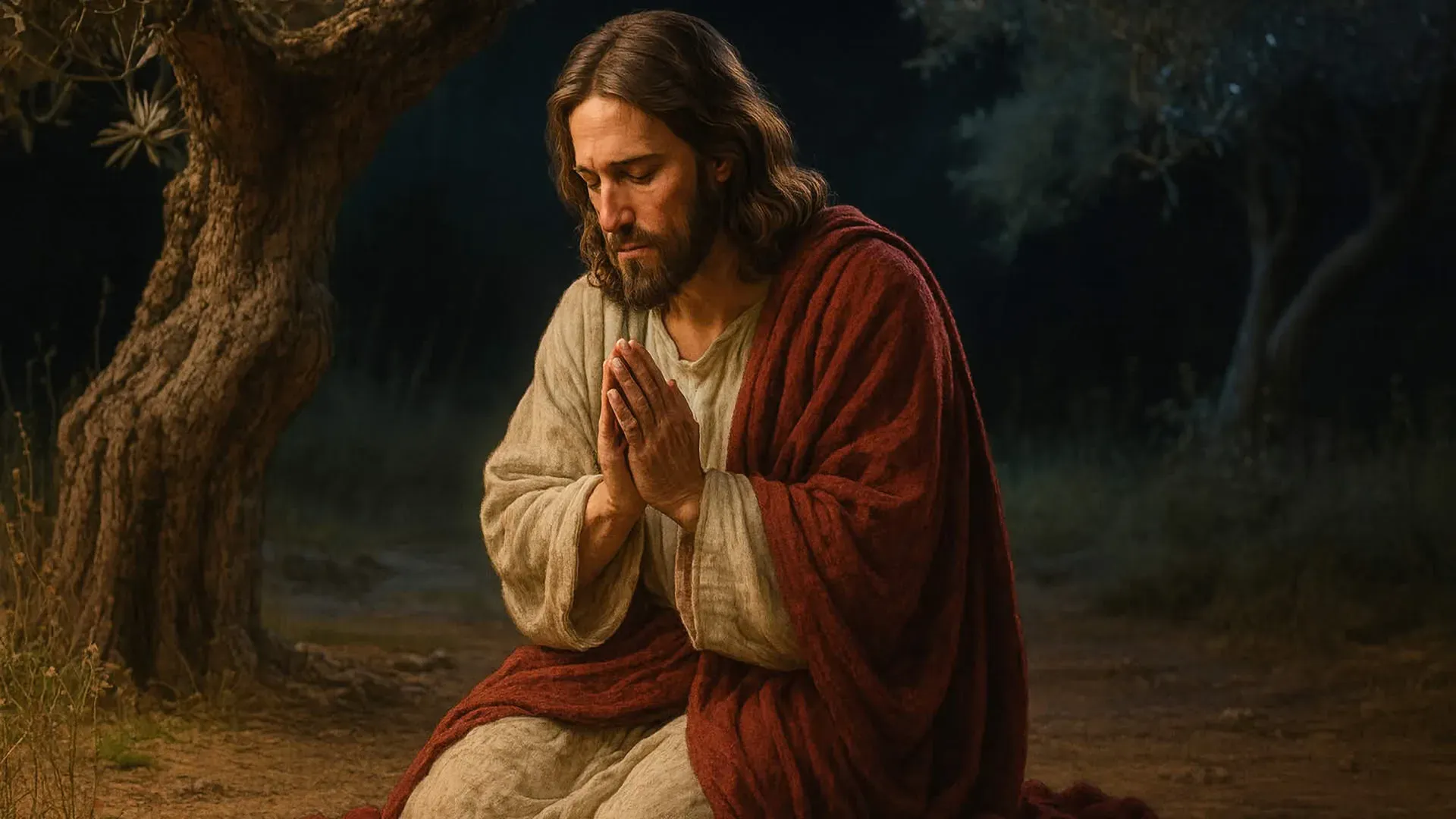
When the disciples asked Jesus, “Lord, teach us to pray” (Luke 11:1), He did not give them formulas, long speeches, or empty repetition. Instead, He gave them something both simple and profound — a model prayer that Christians across centuries would come to know as The Lord’s Prayer. It is not a performance. It is not a magic spell. It is truth.
“Our Father who art in heaven”
The first words are radical. Jesus does not begin by naming God as a distant Creator or Judge. He says Father — in Aramaic, Abba, a term of intimacy and trust. Yet this Father is also “in heaven” — reigning, holy, and above all. It anchors us in both the nearness of God and His majesty. We are not praying to a force. We are praying to a person — our Father.
And not “my Father,” but “our Father.” From the start, the prayer reminds us that we do not come to God alone. We are part of a body, a people, a family. Prayer is not just personal. It is also communal.
“Hallowed be Thy Name”
“Hallowed” means made holy. But God’s name is already holy — so why pray this?
Because the world does not treat it as holy.
This is a cry of longing: May Your name be honored in our lives, in our churches, in every place where it has been profaned. May the truth of who You are shine without distortion. May we stop using Your name lightly, or living in ways that misrepresent You. It is a prayer for true worship.
“Thy Kingdom come, Thy will be done on earth as it is in heaven”
Jesus taught this prayer in occupied territory. The Jews were under Roman rule, oppressed and waiting for deliverance. When He said “Thy Kingdom come,” it was a bold statement: Let God reign. Not Caesar. Not our flesh. Not evil. Let God’s will, not ours, be done.
In heaven, God’s will is done perfectly. On earth, it is resisted.
This line is a surrender: Your way, not mine. Your rule, not mine. It rejects the illusion that we are in control. It calls for God to bring His justice, His mercy, His truth to every part of this fallen world — starting with our own hearts.
“Give us this day our daily bread”
Jesus does not say, “Give us riches,” or “Secure our future.” He teaches us to ask only for what is needed for today — just like the manna in the wilderness, which came one day at a time. It is a rebuke to greed and anxiety. We are not to hoard. We are to trust.
“Bread” means food, yes — but also what we need to live: strength, shelter, peace. This line reminds us that God is not just a cosmic judge. He is the one who feeds His children.
And again — “us,” not just “me.” We are not just to pray for ourselves, but for the hungry, the poor, the forgotten.
“Forgive us our trespasses, as we forgive those who trespass against us”
This is the only line in the prayer with a condition attached. It teaches that God’s mercy and our mercy are linked. Jesus later said, “If you do not forgive others, neither will your Father forgive you” (Matt. 6:15). That is not a threat. It is a truth. If we cling to bitterness, how can we receive grace?
We all sin. We all trespass. This line teaches humility. It breaks pride. It brings us back to the cross, again and again.
And it reminds us that just as we are forgiven, we must let go of vengeance. The forgiven must forgive.
“Lead us not into temptation, but deliver us from evil”
God does not tempt us — James 1:13 is clear on that. But Jesus teaches us to pray for protection from being tested beyond what we can bear. Temptation is real. Evil is real. This world is a battleground.
We need deliverance. Not just strength to endure, but rescue.
This line is an acknowledgment that we are not strong enough on our own. It humbles us again. It places our hope not in our discipline, but in God’s mercy to shield us. It’s a prayer for spiritual survival.
“For Thine is the Kingdom, and the power, and the glory, forever. Amen.”
Though not found in the earliest manuscripts of Matthew, this doxology became a cherished part of the prayer in the early church. It ends not with man, but with God’s eternal rule.
His Kingdom. His power. His glory. Not ours.
It reminds us that all our asking — for bread, forgiveness, guidance — is only rightly placed if it is aimed toward His glory. This is not a prayer to build our little empires. It is a prayer to align us with His eternal reign.
The Lord’s Prayer is not a casual thing. It is not to be rattled off without thought. It is a dangerous prayer, because if we truly mean it, it will change our hearts.
It will expose our selfishness.
It will humble our pride.
It will shatter our self-sufficiency.
And it will anchor us in the reality of who God truly is.
This prayer is not about performance.
It is about alignment.
Jesus gave us these words not as ritual, but as reorientation — away from self and toward the Father.
If we pray it truthfully, it will reshape our desires, reorder our values, and return us to the truth:
That He is holy.
That we are His.
And that His Kingdom is coming.
Comments (0)